
Overview of content
When survivors are not heard
Further reading
Training Manuals
Upcoming events
Dear colleagues,
Written by: Frida Vole, Student in Human Geography, UiO
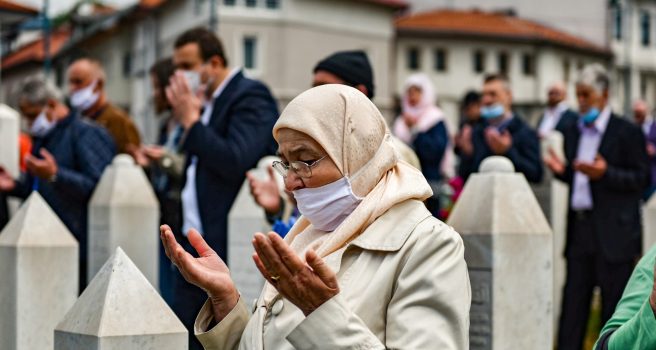
Peacebuilding is not only negotiated at the political level, but it is also shaped in the collective memory of civil society. In the reconstruction of post-conflict societies, survivors’ memories and narratives remain central to reconciliation. These accounts are continuously shaped by the survivors themselves and society as a whole. Consequently, how a community remembers conflict can either foster recognition and healing or deepen division.
Collective memory and the recognition of past atrocities are essential for sustainable peace in Bosnia. When it is distorted or silenced, reconciliation becomes challenging. Questions of acknowledgement remain contested, as the parliament of Republika Srpska still describes the atrocities of 1992-1995 as a civil war. Even in reference to the 8,000 lives lost in Srebrenica in July 1995, the term genocide is avoided. This ongoing denial is demeaning to the survivors and affects how victims are commemorated.
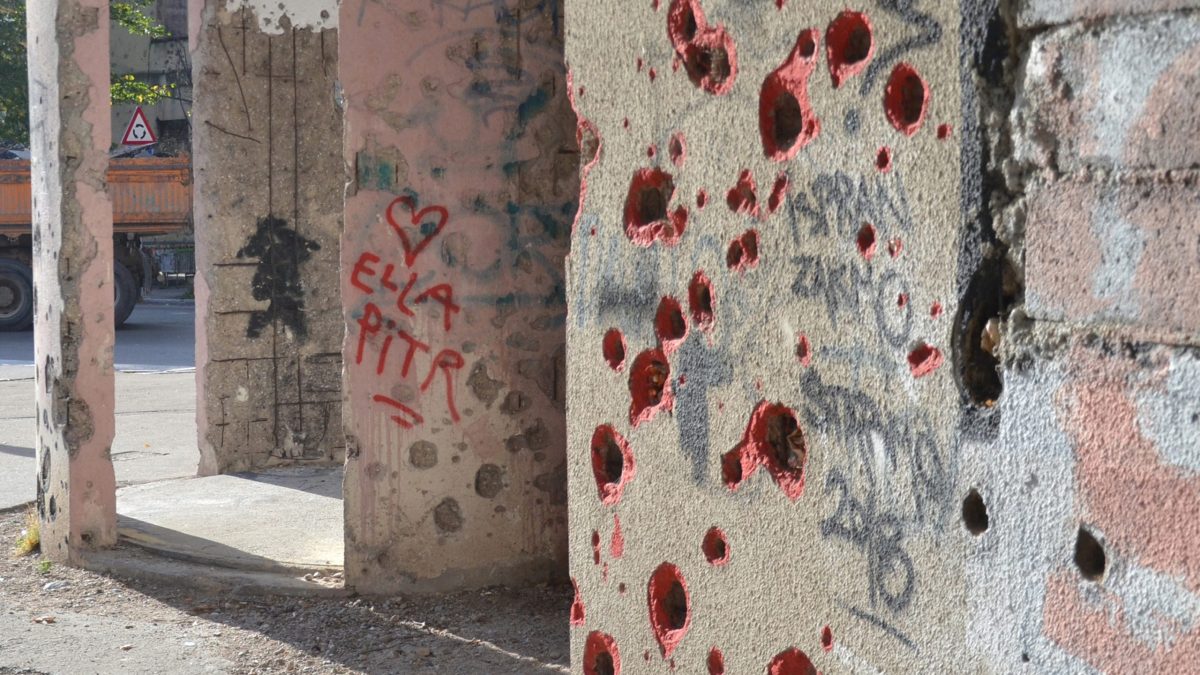
Deep ethnic polarization persists today
The culture of memory remains extremely sensitive. Until a new generation of political leaders is willing to publicly reject the politics and ideology that fuelled the atrocities of the 1990s, the younger generation will likely inherit these divided narratives.
Deep ethnic polarization persists today, and the culture of memory remains extremely sensitive. Until a new generation of political leaders is willing to publicly reject the politics and ideology that fuelled the atrocities of the 1990s, the younger generation will likely inherit these divided narratives. Disagreements over what occurred during the conflict, combined with unresolved trauma, shape societies long after the weapons are lowered. In some cities, children of Serb and Bosniak lineage attend different classes at the same school, where history is taught from differing textbooks. New generations are being raised in a society impacted by polarization, preserving tensions and divisions into the future.
The lasting impact of denial and unresolved collective memory in post-war Bosnia is reflected in the experiences of survivors such as Alma Mustafić. She was eleven years old when Bosnian Serb forces invaded Srebrenica. Like thousands of others, her family was forced to flee during the genocide. However, the aftermath created a new layer of trauma, defined by the continued struggle for recognition and the lack of accountability from both Bosnian institutions and the Dutchbat forces present during the massacre. Her experience demonstrates how the consequences of war continue long after armed conflict ends.
Despite Bosnia appearing to be a seemingly peaceful country, the path towards lasting peace remains long. The consequences of the war are still visible within civil society. The ongoing struggle for recognition of what actually happened demonstrates the importance of political institutions taking responsibility. The lack of accountability continues to hinder sustainable peace and may increase the risk of future conflict. Without recognition, accountability, and a shared understanding of the past, Bosnia risk only the absence of war rather than true reconciliation.
Further reading about Bosnia and Herzegovina
More than twenty years after the war, Bosnia and Herzegovina remains deeply divided due to ongoing denial of past atrocities like the Srebrenica genocide and unresolved trauma.
Peacebuilding and Reconciliation through the Memory of ...
UNESCO
Documentary heritage of the Memory of the World International Register fosters international understanding and cooperation by encouraging joint nominations, welcoming submissions on shared histories and cultural heritage, and providing a platform for...
Rulings and facing the past in Bosnia and Herzegovina
ProPeace
Criminal justice constitutes a fundamental element of transitional justice and provides a sound basis for facing the past, building trust within communities and eventually also reconciliation.
Collective Memories and Community Interventions: Peace ...
Michael Soto, Joachim Savelsberg
This paper examines the role of community interventions in post-conflict settings. The focus is on peacebuilding through the shaping of collective memories, achieved through the transformation of social ties.
30 Years After Srebrenica: Why Memory Still Matters
UN
Between 1992 and 1995, Bosnia and Herzegovina endured one of the darkest chapters in Europe’s post-war history, a brutal war marked by ethnic cleansing, siege, and ultimately genocide.
The Three Promises We Must Keep to Every Child in Bosni...
UNICEF
On World Children’s Day, we turn our eyes toward the future. Yet in Bosnia and Herzegovina, that future for many children remains uncertain. Year after year, we witness the same troubling patterns: the most vulnerable children are left behind, their ...
Bosnian children fight back against segregation in scho...
BBC
Interview of students experiencing the two schools under one roof concept from 2019. “I am separated from my good friend, Amra; we can only spend time together at weekends,” 11-year-old Asja Besirevic complains.

All our gender-based violence manuals can be downloaded for free from the MHHRI website
Three gender-based violence manuals have been developed to support helpers working with women, boys and men, and children who have experienced sexual violence.
These manuals are available in multiple languages, enabling survivors and helpers to access the content in their preferred language while maintaining consistent headlines and numbering. This multilingual approach facilitates teaching when participants and trainers speak different languages. Each manual includes a toolbox of grounding exercises that survivors can use on their own, to manage emotions or in collaboration with a helper. Additionally, helpers can use these exercises for their own self-care.
Upcoming events
Digital Mental Health International Conference 2026 (DMH 2026)
This premier platform addresses global mental health needs by exploring the rapid development of digital technologies. 16-18 June 2026. Hong Kong, China & Online
21st European Symposium on Suicide and Suicidal Behaviour (ESSSB21)
This symposium gathers researchers, clinicians, and advocates to share new ideas and research in suicide prevention under the theme Rethinking Suicide Research and Prevention. 26-29 August 2026. Vilnius, Lithuania
World Congress of Psychiatry WCP
Together with our member society, the Swedish Psychiatric Association, the World Psychiatric Association (WPA) is thrilled to invite you to the 26th WPA World Congress of Psychiatry (WCP 26) in the vibrant city of Stockholm, Sweden, from 23-26 September 2026.
ISTSS 42nd Annual Meeting
Annual Meeting is a global forum for professionals and researchers dedicated to understanding and addressing the impact of trauma. We bring together diverse perspectives to advance scientific knowledge, develop effective treatments, and inform public policy. September 23-26, 2026, in San Antonio, Texas, USA.
The International Society for Health and Human Rights (ISHHR) invites abstract submissions, focusing on ceremonial and culture-based approaches to healing in the context of human rights abuses. We welcome contributions from Indigenous leaders and community members, practitioners, researchers, students, educators, advocates, and others working with survivors of trauma and human rights violations. While all relevant topics are encouraged, we particularly welcome submissions addressing intergenerational trauma and Indigenous perspectives and experiences. Abstract submission deadline: 1 September 2026
The SVRI Forum
Is the world’s leading conference on research, evidence, and solutions to prevent and respond to violence against women (VAW), violence against children (VAC), and other forms of gender-based violence (GBV).
Bangkok, Thailand, from 5 – 9 October 2026
We appreciate feedback and comments
Welcome to our new subscribers, we hope you will find our content useful. The Mental Health and Human Rights Info Newsletter is a newsletter with the aim to provide insight on a certain subject across the scope of our work; human rights violations in war and conflict areas and mental health. Our intention is to deliver a newsletter as a short “lecture” where you can find relevant information regarding a specific subject from a mental health perspective. You will receive our newsletter 5 times a year.
We would appreciate your thoughts and suggestions on other issues you would like to see in this newsletter or if you are planning an event on related issues, please let us know so we can include your event in our newsletter.
If you know anyone who would be interested in receiving this e-newsletter, please forward it, and encourage them to sign up.
Facebook and Instagram
On our MHHRI Facebook page, and on Instagram we are continuously posting new and relevant articles that we add to our website, as well as events and videos. We also just launched our new LinkedIn page!
Sincerely yours,
Take care – and we are wishing you all the best.
Sincerely yours,
Mental Health and Human Rights Info teampost@hhri.orgwww.hhri.org
Copyright © 2025 MHHRI.ORG All rights reserved.
MHHRI are not responsible for the content of external websites. Links are made because we think the content might be of use. The comments and evaluation on this page are made by our staff to make the links more accessible to you, and is entirely our subjective impression of the link in relation to our context.
Our mailing address is:
Post@hhri.org